

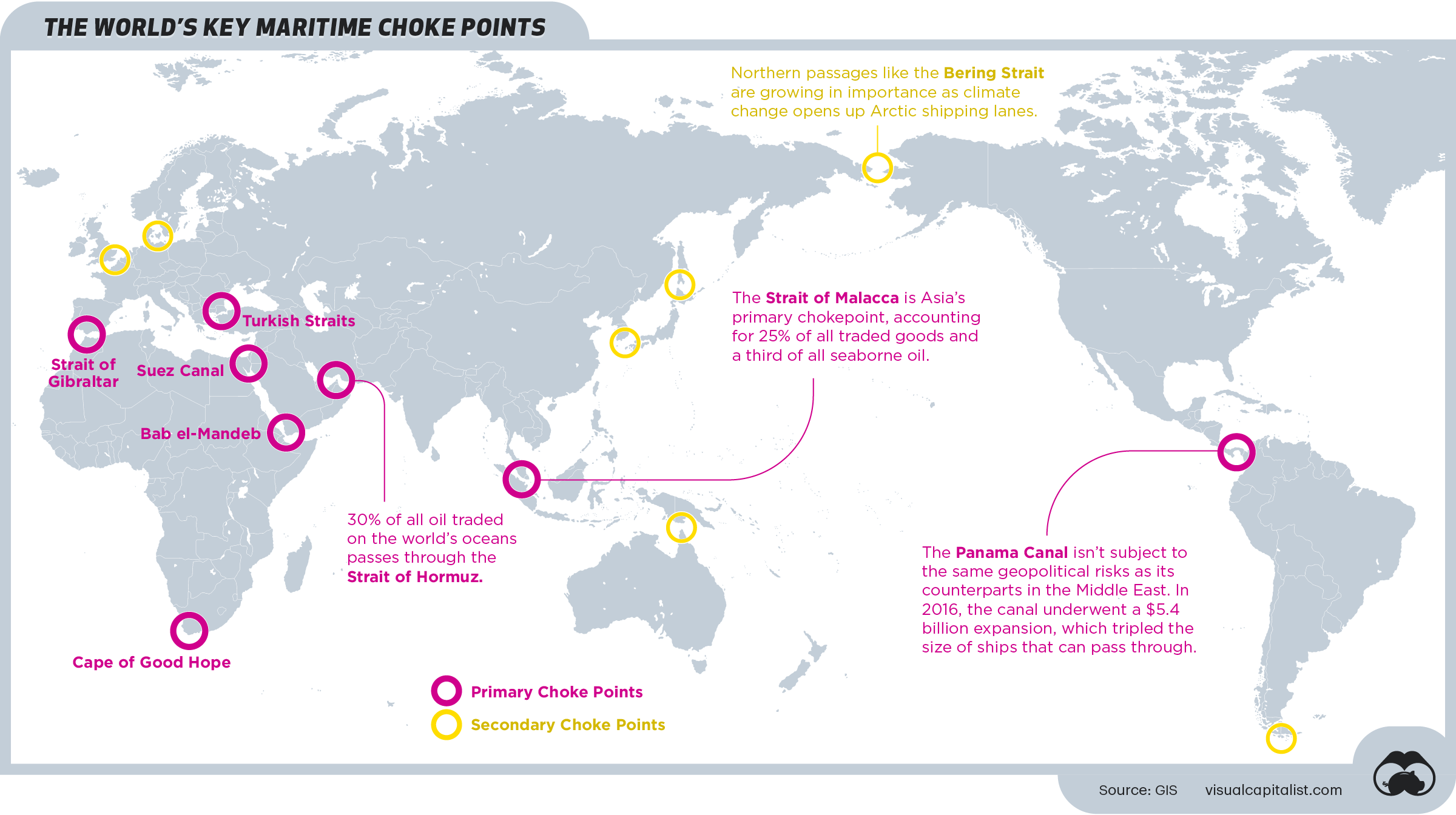
There is a strategic logic to what the US has spent the past several months doing in the Middle East, Latin America, Eurasia, and Southeast Asia that goes well beyond the stated objectives of any single operation. Taken together, the seizure of Venezuelan oil infrastructure in January 2026, the war on Iran, the Ukrainian attacks on Russian tankers and refineries, and the Major Defense Cooperation Partnership signed with Indonesia on 13 April 2026 constitute a coherent programme of energy encirclement directed at one target: China. This is not a war about Iran only. Iran is the instrument. The war is strategically about China.
The Geometry of Encirclement
China imports roughly 11 million barrels of oil per day. Iran, before the war, supplied around 87% of its exports to China at heavily discounted prices, accounting for approximately 1.5 million barrels per day of Chinese intake. Venezuela, whose largest customer was China through a debt-for-oil arrangement that had been running for over a decade, sent 55% of its crude to Beijing before Maduro’s removal in January 2026. Russia, through Rosneft and Lukoil, supplied as much as 20% of Chinese crude imports – roughly 2 million barrels per day – before US sanctions in late 2025 forced Chinese state refiners Sinopec and PetroChina to cancel shipments, affecting nearly 45% of Russia’s crude flows to China. China’s imports from other Gulf countries through Hormuz were also impacted.
In the space of less than four months, Washington has moved to simultaneously tighten or complicate access to China’s most important oil suppliers. Russian supplies were disrupted by the Ukrainian attacks on Russian tankers and refineries. The Strait of Malacca, through which 40% of global trade flows and the vast majority of China’s seaborne energy imports travel, is also scrutinised. The US-Indonesia defence pact, signed last week, expands joint operational access to Indonesian airspace, deploys American surveillance sensors along the strait, and integrates Washington’s monitoring architecture across the waterway. China now faces a coherent chokepoint strategy stretching from the Caribbean to the Persian Gulf to the South China Sea. That is not coincidence. That is a doctrine.
The Venezuela piece is particularly revealing because it was done without a shot being fired at China directly. Washington extracted Maduro, handed control of oil revenues to a US-aligned transitional authority, and then issued the studied message that Beijing could continue purchasing Venezuelan crude – but at market prices, not the discounted rates that had serviced Chinese debt. The US effectively transformed China’s largest South American oil relationship from a strategic asset into a dollar-denominated commercial dependency supervised by Washington. China’s “teapot” refiners, the private processors that handle the bulk of sanctioned crude, are no longer just commercial actors. They have been reclassified as strategic vulnerabilities whose survival depends on US political tolerance.
The Deindustrialisation Thesis
The precedent for what Washington is attempting with China was already demonstrated on Europe. When Nord Stream was destroyed in September 2022, Germany lost the industrial foundation that had made its manufacturing sector the engine of European growth. Cheap Russian gas had underwritten everything from BASF’s chemical production to the competitiveness of German steel. With it gone, Germany’s deindustrialisation accelerated into a structural collapse: electricity costs surged to among the highest in the developed world, major firms relocated production, and the country’s GDP contracted for two consecutive years. Europe’s industrial base, once Washington’s peer competitor in advanced manufacturing, now depends on US LNG at US-determined prices.