

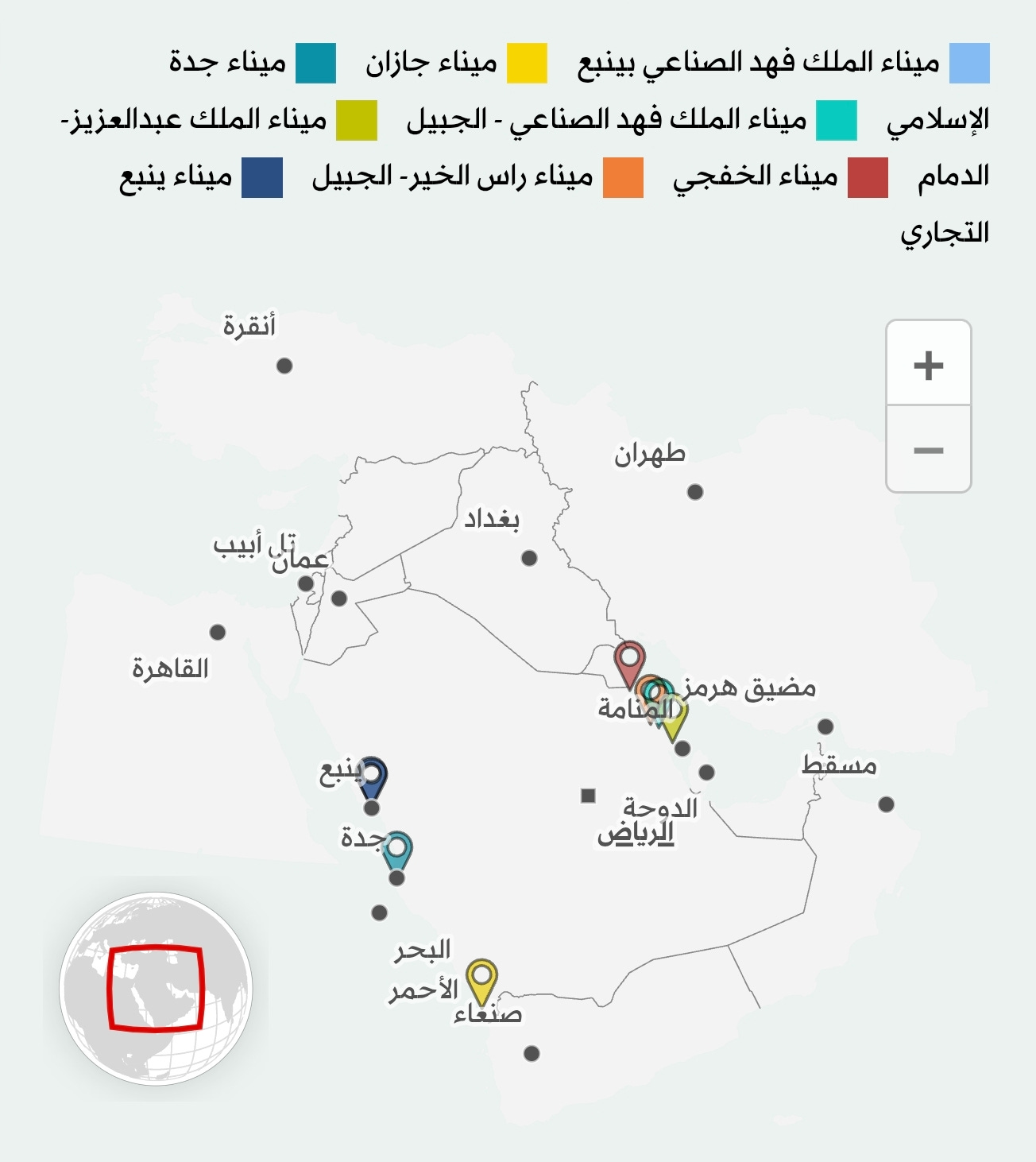
Qatar’s decision on 7 March 2026 to facilitate alternative overland transit through Saudi Arabia may prove to be one of the most consequential trade moves of the war. At first glance, it looked like a technical customs response to a regional emergency. In reality, it signalled something much larger. It showed that the current war is not simply disrupting commerce across the Gulf and the Levant. It is accelerating a struggle over who will control the next map of regional trade. On 17 February 2026, Mwani Qatar and the Saudi Ports Authority signed a memorandum of understanding in Riyadh to deepen maritime and logistics cooperation, covering port management, direct maritime and land connectivity, logistics services, cross-border transit, joint maritime corridors, regional distribution centres, digital transformation, data governance, and artificial intelligence.
At a moment when war is exposing the fragility of existing Gulf trade routes, Doha and Riyadh are not merely reacting to disruption or improving routine coordination. They are putting in place the institutional, logistical and digital foundations of an alternative trade architecture that strengthens Saudi-Qatari integration and gives material form to a parallel corridor logic running through Gulf land depth rather than the older model centred elsewhere.
The original India Middle East Europe Economic Corridor (IMEC) was launched in September 2023 as a US-backed framework linking India to the Gulf and Europe through maritime links, rail, energy infrastructure and digital cables. But its logic was always political as much as commercial. It was meant to anchor a new regional order in which the UAE and Israel would sit at the centre of east-west connectivity, while Saudi Arabia would eventually be folded into a structure largely designed elsewhere. That design now looks far less durable than its sponsors imagined.