

Dear readers. MENA Unleashed is a reader-only platform with no sponsors or ads, so if you value our work please consider becoming a paid subscriber and sharing it with others, as your support keeps us independent.
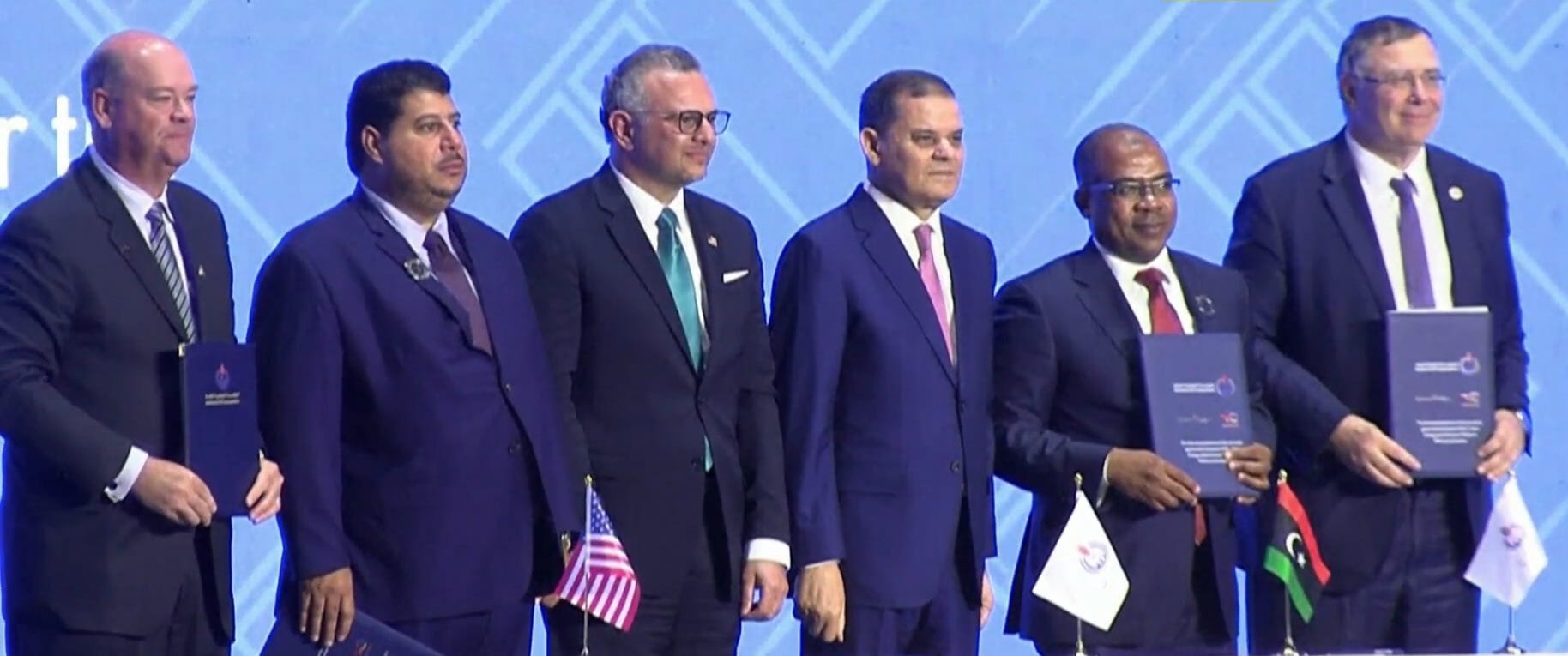
Libya’s government of national unity in the West has signed over $20 billion in oil development agreements with Western companies in a week, marking the most significant foreign investment increase since the 2011 NATO intervention. The timing is no accident. Prime Minister Abdul Hamid Dbeibah is wagering that Donald Trump’s return to the White House has fundamentally altered the terms of engagement in the Middle East, creating space for leaders with contested legitimacy to bypass traditional constraints through offering economic benefits.
The deals with TotalEnergies, ConocoPhillips and the emerging memorandum with Chevron represent more than revenue-generating agreements. They signal Dbeibah’s recognition that the post-Gaza ceasefire regional order operates on different principles than what preceded it. Where previous American administrations demanded political roadmaps and a democratic process, Trump’s approach centres on deal-making, energy supplies security and containment against Iran.
The Board of Peace Template
The Board of Peace that Trump established to govern post-war Gaza provides the conceptual template for Libya’s current manoeuvring. The Board explicitly sidesteps questions of democratic legitimacy in favour of technocratic administration backed by great power guarantors and regional capital. Gaza’s interim governance model features Trump as chairman with participation from Gulf states, Egypt and select international figures, all operating outside traditional UN structures.
Dbeibah appears to be positioning Libya for a similar accommodation. By signing these investment agreements that generate immediate production increases and long-term revenue streams, he is building the case that his administration delivers economic outcomes regardless of its democratic deficit and does not represent all Libyans. The 25-year TotalEnergies agreement alone promises $376 billion in projected revenues and an additional 850,000 barrels per day in production capacity.
The Board resolves a structural problem for leaders like Dbeibah. Traditional political transition frameworks demanded elections, constitutional processes and unified security sector integration before major investments proceed. Trump’s approach inverts this sequence, allowing investments to precede and potentially substitute for a national political settlement. Libya’s eastern-based parliament and Khalifa Haftar’s Libyan National Army have objected to these agreements as violations of constitutional procedure and sovereignty. But their objections carry diminished weight in an environment where Trump prioritises increasing production capacity over political correctness.