

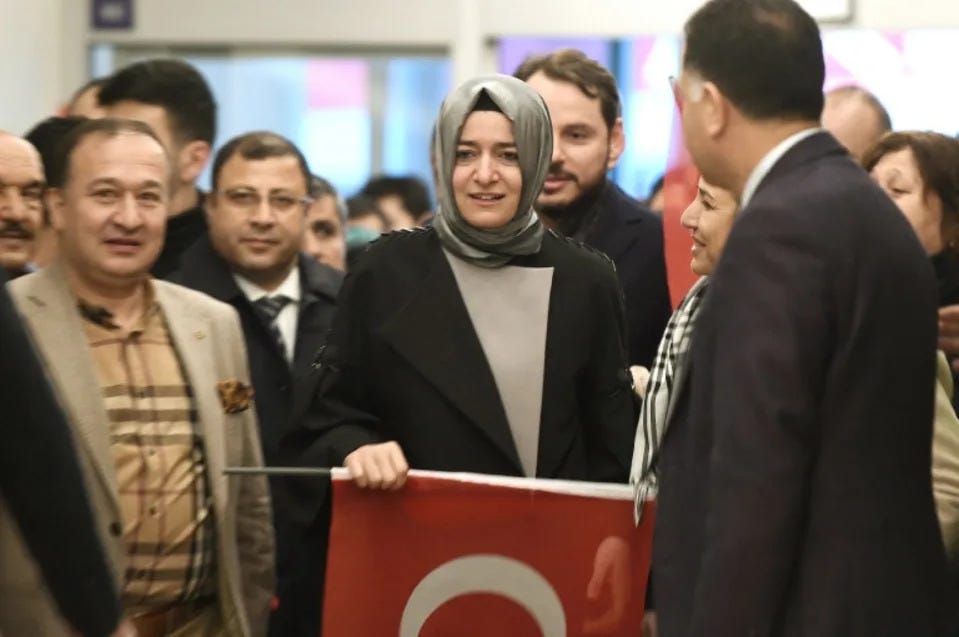
Turkey’s ruling party lost a deputy chair on 27 September to a stock market scandal that has frozen the savings of 455,758 people. She resigned after the opposition alleged that she and her husband turned TL 163m put into a shipbuilder’s shares in April into TL 2.17bn of sales before the market broke. A day later, prosecutors issued a warrant for the son-in-law of a deputy finance minister, until recently an independent director of a company inside the same web. A former ambassador who once sat on the boards of Halkbank and the sovereign wealth fund is in custody, so is a former deputy governor of the central bank, and the founder of the group at the centre of the affair used a post viewed 11m times to proclaim his firm domestic and national and his loyalty to the president. İşbank and Ziraat are now liquidating 131 funds run by 7 asset managers holding roughly TL 890bn, about $18bn, over a period that may run to 6 months.
This is not a rogue fund story. It is the moment at which a bubble grown inside the government’s own economic programme collided with a reserve position already drained by war and political shocks, and it has exposed how little of Turkey’s stability is actually Turkey’s.
A bubble burst
The mechanism was simple and the regulator had watched it for a year. Funds built concentrated stakes in thinly traded companies linked to their own groups, the buying lifted the shares, the higher prices inflated net asset values, and the reported returns pulled in new money that bought the same shares again. 2 Pusula funds returned 164% and 144% in the first 7 months of 2026. A single fund reported a gain of 10,128%. Hedef Holding, a listed investment vehicle, briefly became the 2nd largest company on the exchange by market value, behind Aselsan. The capital markets board says it identified the pattern in the final quarter of 2025 and put it to the Financial Stability Committee on 2 December. The rules that tightened concentration and related-party financing arrived on 28 August 2026. Pusula defaulted on redemptions on 15 September, Tera and Atlas followed the next day, the BIST 100 fell 5.54% in a session and the run began. Roughly TL 600bn left domestic funds between 31 August and 23 September. Money market funds shrank by TL 456bn, or 21.4%, in the single week to 18 September. Around TL 4.6trn of market value has gone since the end of August.
None of this was incidental to the government’s economic model. With inflation at 31.51% and the policy rate held at 37% for 5 consecutive meetings, bank credit was priced out of reach and the finance minister openly steered companies toward the equity market. 34 firms raised TL 82.4bn in IPOs in the first 8 months of 2026, more than in the whole of 2025. Households fleeing inflation followed. A system instructed to grow capital markets as a substitute for credit grew a manipulation machine instead, and the state either did not look or looked and profited. A former deputy head of the financial crimes agency petitioned the presidency’s complaints centre about the group in July 2025, filed a criminal complaint in January 2026 and was detained in April for questioning a fund’s returns on social media. A letter from the Istanbul chief prosecutor asking the regulator to examine unusual trading by the 28-year-old chair of Pusula dates from February 2025. The warnings were on file for 19 months before the rules changed.
The lira is not collapsing, the reserves are
The currency trades at 49.00 to the dollar, a record, down 13.95% this year and 11.79% since the Iran war began on 28 February. That is not a collapse. It is a managed crawl, and the cost of managing it is paid in reserves. The central bank sold an estimated $5bn to $5.2bn on 16 September alone. Gross reserves have fallen for 5 consecutive weeks, from $188.4bn on 21 August to about $171bn, a loss of $17.4bn, and net reserves excluding swaps dropped from $53.4bn on 4 September to $43.1bn on 18 September. The 5-year CDS has climbed from 204 basis points at the start of the month to 250, a 4-month high and the 2nd widest in emerging markets after Argentina. There has been no visible flight into dollars. Lira deposits rose by $12bn in the week to 15 September and foreign currency deposits by only $2.7bn the week after, most of it corporate. The pressure is not coming from Turkish savers. It is coming from the foreign money that funds the whole arrangement.
This is the 4th reserve shock in 18 months. The jailing of the Istanbul mayor in March 2025 cost around $50bn. The war took $43.4bn out of official reserves in March 2026 alone, the largest monthly fall on record, as the bank sold more than $26bn of foreign exchange and roughly 50 tonnes of gold, and Turkey’s reported holdings of US Treasuries fell from $16bn to $1.8bn in a month. The court’s removal of the main opposition party’s leadership in May cost another $3bn in days. The carry trade then rebuilt gross reserves by about $30bn between late March and mid-August, and September has taken more than half of that back. Foreigners’ lira swap position peaked at $65.3bn and has slipped to $58.9bn. The foreign portfolio stock stands at $60.9bn, net inflows this year are $7.5bn, and only $1.58bn of that went into equities. Turkey’s liquidity is a leveraged foreign position on its own currency. It is rented, not owned, and every domestic accident raises the rent.
The external ledger shows short-term external debt is $177.1bn on an original maturity basis and $248.1bn on a remaining maturity basis. The gross external financing requirement runs at 18.2% of GDP this year. The Treasury has raised $12.2bn abroad in 2026, the latest a $1.5bn 10-year bond on 23 September at 7.65%, against 6.35% on the 7-year sold in January. Energy imports reached $40.1bn in the first 7 months, up 7.2%, and the new medium-term programme assumes a $71bn bill for the year. Growth slowed for a 4th straight quarter to 2.3% in Q2 with exports down 3.4%. Interest payments consumed TL 1,988bn in the first 8 months, up 39.4%, and in 2027 the interest bill of TL 3.975trn will exceed the entire budget deficit of TL 3.865trn. The state borrows to pay its lenders, and the inflation target has been rewritten 17 times since 2021, most recently from 16% to 28.4% for this year.
Assets for sale, partners with empty pockets
On 5 September, the president signed a decision to transfer the operating rights of the 2 Bosphorus bridges, 8 highways and 5 ring roads for 30 years, with a deadline of 31 December 2031. The network earned about $600m in 2025, a toll stream that could exceed $25bn over 3 decades, and the price being discussed is $3.5bn to $4bn. Halkbank filed on 27 August for a secondary offering through a 25% capital increase that has yet to price. The wealth fund sold 5% of Türkiye Sigorta for about $150m in May and 1.53% of VakıfBank a year ago. In the same weeks, the same fund agreed with Turkcell to buy 46% of TOGG, a carmaker that lost TL 14.61bn in 2025. The new medium-term programme cut the 2026 privatisation target from TL 185bn to around TL 105bn, and even the original figure equalled 13 days of January’s interest bill. Asset sales cannot close that gap. What they do is signal to creditors that the state will monetise infrastructure before it lets the programme fail. The only foreign name attached to the bridges is a Portuguese toll operator in talks.
The Gulf money that was supposed to underwrite Turkey has evaporated. The UAE’s $50.7bn package of July 2023 produced $1.26bn of realised investment across 2023 to 2025 and $95m in the first 2 months of 2026. The $8.5bn earthquake bond collapsed, the Abu Dhabi bid for İzmir’s Alsancak port failed and the port’s cargo operations went to a domestic group under a partnership arrangement. Saudi Arabia’s $5bn deposit was repaid in July 2024 and nothing has replaced it. Turkish exports to the Gulf fell 21% in the first 7 months of 2026 and exports to the UAE fell 48% as Hormuz closed. The Mecca Joint Defence Agreement of 7 August, renamed the Mecca Defence Alliance on 31 August with a secretariat in Riyadh, contains no published financial terms, has not been ratified by parliament and its text has not been released. What Saudi Arabia did fund this year was Pakistan, with a new $3bn deposit in April and a 3-year extension of an existing $5bn facility. The single Saudi commitment to Turkey in 2026 is a $2bn solar power purchase agreement whose financial close is scheduled for 2027. No fighter jet contract has been signed. Saudi Arabia ran a deficit of SAR 160bn in the first half of the year, financed entirely by borrowing, and cut the Public Investment Fund’s international allocation to 20%. Turkey joined a defence pact with a partner that is itself borrowing, and the alliance’s first chiefs of staff meeting on 25 and 26 September, called after Houthi missiles hit Taif, Yanbu and Riyadh, produced liaison officers not deposits.
Washington and Brussels are warm and empty-handed. The president met the US president in New York on 24 September and came away with a stated positive willingness on Turkey’s return to the F-35 programme. There is no swap line, no financing. The EU sent 3 commissioners to Ankara on 1 July, agreed in February to work toward a modernised customs union and restarted European Investment Bank lending with €200m in June. Washington and Brussels simply declined to fund a government they do not trust while buying its drones and using its geography.
The political cost
The scandal lands on a ruling party that has spent 18 months dismantling its opposition by judicial means. The Istanbul mayor has been jailed since March 2025. A court removed the main opposition party’s elected leadership on 21 May 2026 and handed the party back to its previous chair. The ousted leader founded a new party on 24 July and took 91 of 600 seats with him. On paper, the government faces a fragmented opposition and no scheduled election. In practice, the frozen accounts belong disproportionately to conservative retail savers drawn to funds that marketed themselves as domestic, national and interest-free. Pusula’s savings-finance companies pooled household money for homes and cars without conventional interest, and the state’s Islamic participation bank Emlak Katılım has opened talks to absorb them in what amounts to a Treasury-backed rescue of the ruling party’s own base. The president’s promise that whoever engaged in manipulative schemes will be held to account is undercut by the list of the accountable, which now includes a party deputy chair, a deputy minister’s son-in-law, a former ambassador, a former central bank deputy governor and a former Halkbank director.
What matters politically is the spreading belief that the government knew. The justice minister said earlier this month that manipulation should not go unanswered and in the same breath warned against unnecessarily alarming markets because so many citizens were invested. A retired police officer shot himself at a pension protest in Ankara on 26 September.
The fund scandal did not create the reserve problem, the war did, but it has shown that the government’s answer to high inflation was to let a manipulation machine stand in for a credit market, and that the machine enriched people close to power. What remains is a state that must keep the lira stable enough to hold foreign swaps and domestic deposits, keep rates high enough to do so, and keep its own base from asking why the returns that made them feel rich flowed to the party’s own officials.