

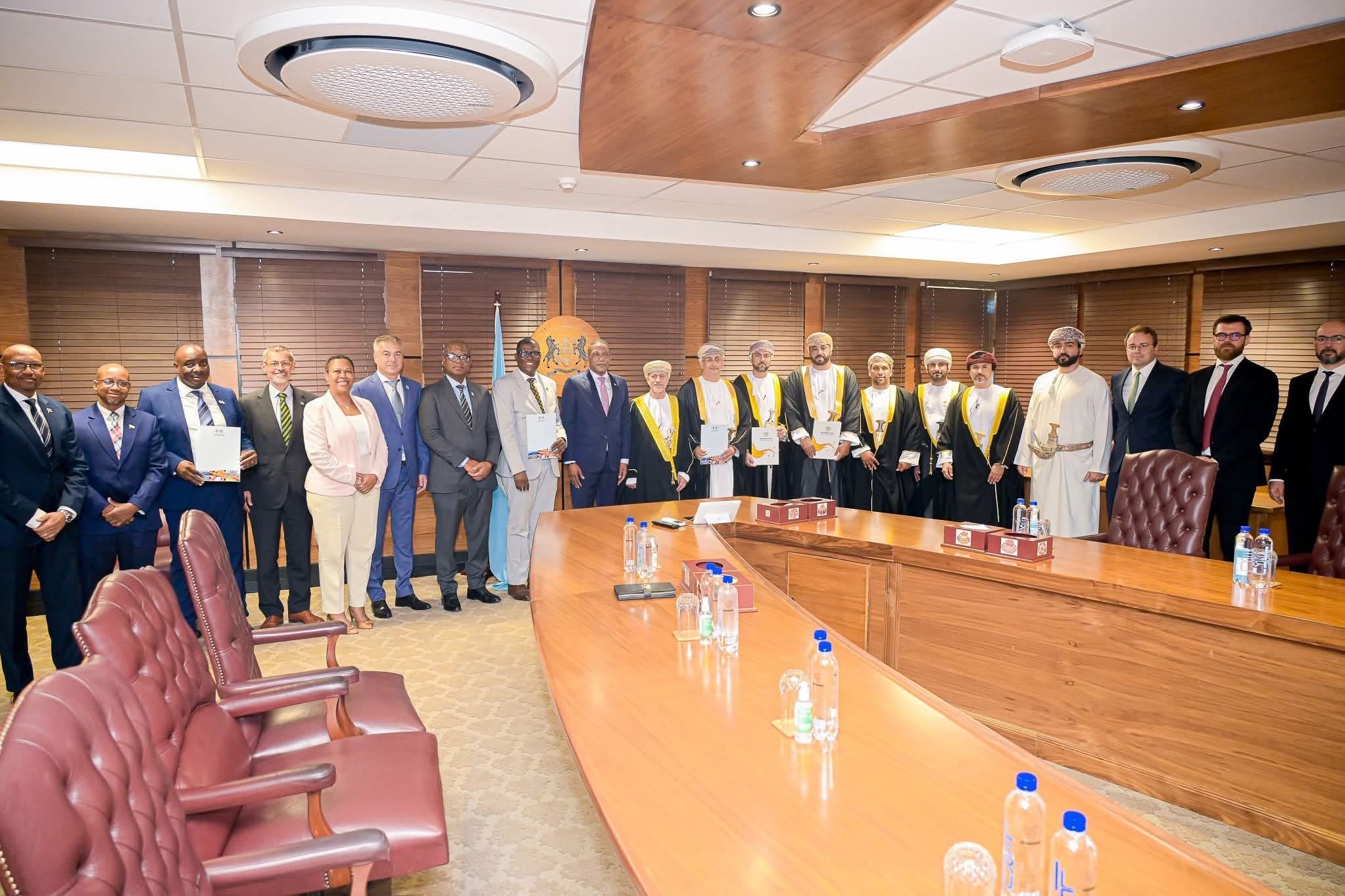
Oman’s state-owned OQ and Botswana Oil signed an agreement to collaborate on energy infrastructure, storage, and trading, while a separate agreement commits both sides to develop solar, wind, and battery projects with a capacity of up to 3 gigawatts in Botswana. This sits squarely under Oman Vision 2040, the national roadmap that pushes the country to build a diversified, outward-looking economy that is less dependent on crude exports and more anchored in overseas investments and logistics.
The newly gained Saudi geopolitical leverage with the US via the MP materials and department of war deal for minerals refinery is increasing the appetitite of other gulf countries to grow leverage as this becomes a key security hook to tie the us into the security of these countries
On the Botswanan side, Vision 2036 and recent policy documents explicitly call for diversification away from dependence on diamonds, using energy, mining and financial services as new growth engines. The Muscat deal is being presented as a meeting point for those two long term visions and not just a short term supply contract.
Energy security, trading and a 3 GW renewables bet
The first layer of the partnership is about energy security and infrastructure. OQ and Botswana Oil will explore investments in fuel storage, energy logistics and long term supply of petroleum products into Botswana and its regional market, formalising a relationship that positions Oman as a strategic fuel and infrastructure partner for a landlocked, energy importing state.
The O-Green platform, owned by the Omani government, and Botswana’s Ministry of Minerals and Energy agreed to build integrated renewable projects that combine solar, wind and battery storage up to 3 GW. For Botswana, which currently relies heavily on coal and imports and only plans to raise its renewable share from single digits to 50 percent by 2030, this scale of investment would be transformative.
Botswana’s president has already framed the projects as a path to electricity self sufficiency and eventually to becoming a net exporter of power. Oman, in turn, secures a platform in southern Africa where its companies can deploy capital and know how across the full energy value chain, from fuel storage to large scale renewables and grid-level storage.
Mining and minerals
The mining component reveals the deeper strategic logic. A partnership between Oman’s Maaden Investment Group (Minerals) and the Botswana Geoscience Institute will focus on exploring minerals such as gold and diamonds and potentially other critical metals, using Omani experience in global mining partnerships and processing.
Botswana has spent the last decade trying to move beyond its identity as a diamond state. Vision 2036 and the 2022 minerals policy both underline that non diamond mining should become a central pillar of diversification and that foreign partners are needed to explore new deposits and build value added capacity.
For Oman, which is also trying to upgrade its own mining sector under Vision 2040, this kind of joint exploration agreement in a politically stable African country is a way to gain upstream exposure without going into the highest risk jurisdictions. It also allows Muscat to plug into Botswana’s relatively strong governance record in resource management, something that is increasingly valued by investors and rating agencies.
This is where the Muscat–Gaborone axis feeds into a wider GCC trend. Gulf states are deliberately expanding their mining and minerals portfolios at a moment when these resources are in high demand, using new projects to anchor themselves as indispensable partners in critical supply chains. The larger their footprint in minerals, the more interest they expect from Washington and other Western capitals, which is precisely the political leverage they are seeking.
Oman is operating on a smaller financial scale, but the playbook looks similar and follows a clear logic, using sovereign backed entities to secure long term mineral exposure abroad, tying that to energy and infrastructure projects, and integrating those assets into a broader diversification strategy at home.
Africa as a strategic arena for Gulf diversification
For years, GCC capital in Africa focused on ports, telecoms, real estate and agriculture. The Oman–Botswana package signals that the focus is shifting toward three interconnected areas. Energy transition assets come first because countries like Botswana have abundant solar and wind potential but limited capital and grid infrastructure. Oman’s 3 GW renewables bet fits into a wider pattern in which Gulf states finance and operate clean energy projects in high resource, under-electrified markets.
The second area is critical minerals. Across southern and central Africa, governments are opening up copper, nickel, rare earths and battery metal opportunities and are looking for partners beyond the traditional Western and Chinese players. Botswana itself is actively marketing non diamond mining as a diversification lever and has covered most of its territory with geological surveys to attract new entrants.
The third is integrated value chains. The Saudi–US rare earths deal demonstrates this clearly. Gulf states do not want to remain simple off-takers of raw ore and now aim for refining, separation and eventually magnet and component manufacturing on their own soil. Muscat’s move into Botswana, combined with its efforts to expand domestic mining and processing, suggests that Oman is trying to position itself inside that emerging network, even if its initial steps are more cautious than Riyadh’s.
For African states, this shift opens up an alternative channel of capital and technology that is neither purely Western nor Chinese. For Gulf states, it serves as a hedge on the future, giving them ownership stakes in the minerals and power systems that will underpin the next industrial cycle while they still have surplus petrodollar liquidity to deploy.
Visions and execution long term
The communiqués around the Muscat signing ceremony stressed that the agreements align with the priorities of Oman Vision 2040 and Botswana Vision 2036 and are meant to be the starting point of a strong and sustainable partnership.
Whether that promise turns into real leverage will depend on execution. If OQ and Botswana Oil actually build the storage tanks, trading routes and logistics hubs they are now studying, Muscat will gain an anchor in southern Africa’s fuel and energy flows. If even a significant portion of the 3 GW renewables pipeline reaches financial close, Oman will have helped reshape Botswana’s power mix and will hold a strategic clean-energy asset on the continent. If mineral exploration leads to viable projects, Omani entities will have secured a foothold in an African mining story that goes beyond diamonds.
If those pieces stall, the Oman–Botswana package will risk joining a long list of Gulf–Africa announcements that never moved beyond the press release stage.
Follow us on social media:
📱 Twitter (X): @MENAUnleashed
🎥YouTube: MENA Unleashed
📸 Instagram: @MENAUnleashed
💼 LinkedIn: MENA Unleashed
🎵 TikTok: @MENAUnleashed