

On 15 March 2026, Muscat Clearing and Depository launched a phased SWIFT integration designed to bring Oman’s capital markets into the global financial messaging grid. Phase one goes live by Q2 2026. Full automation follows by year-end. On any normal day, this would be a routine infrastructure upgrade for a mid-tier Gulf economy still pushing toward MSCI emerging-market status. But this is not a normal day. It is the seventeenth day of a war that has closed the Strait of Hormuz, set fire to Jebel Ali port, grounded Dubai International Airport, and forced the world’s largest container shipping lines to declare “End of Voyage” on all cargo bound for the Arabian Gulf. In this context, the SWIFT rollout is not administrative. It is structural. Oman is not modernising in peacetime. It is wiring itself into the financial plumbing of a region whose previous hub is burning.
The Architecture of Collapse
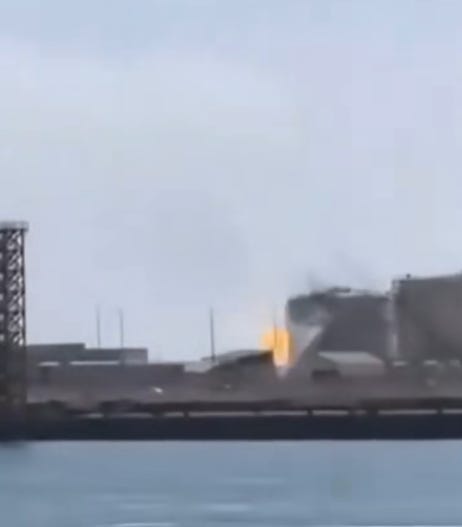
The UAE’s economic model was always a function of circulation. Capital, cargo, passengers, data. Everything moved through Dubai and Abu Dhabi because the systems worked, the insurance was cheap, the airspace was open, and the brand said safety. That is over now. Iran has fired more than 1,800 missiles and drones at the UAE since 28 February. 6 people are dead. 141 are injured. The Burj Al Arab caught fire from interception debris. Dubai International Airport, the world’s busiest for international traffic, has been hit multiple times and continues to operate under rolling disruptions. A fuel tank near the runway was struck on 16 March. ADNOC’s Ruwais refinery, producing 922,000 barrels per day, was forced offline by a drone strike. Jebel Ali port, which handles an average of $530 million per day in non-oil trade, has taken debris damage and been subject to Iranian evacuation warnings. Khalifa Port, with a 65% transshipment ratio, faces the same structural exposure. The Dubai Financial Market fell 4.7% on its first day of trading after a rare two-day shutdown and lost 9% over its first week. Authorities cut the daily trading limit from 10% to 5% to stem capital flight. Foreign investors are repricing the Emirates from safe haven to conflict zone. Dubai generates $30 billion a year from tourism alone. That revenue stream is now under direct kinetic threat. The model that made the UAE indispensable to global trade relied on an assumption of untouchability. That assumption is finished.