

The $1.5 billion Pakistan-Sudan military supplies deal, which was nearing completion in early 2026 and included Karakoram-8 light attack aircraft, over 200 drones, air defense systems, and possibly JF-17 fighters to bolster Sudan’s Armed Forces against the UAE-backed Rapid Support Forces, has been suspended after Saudi withdrew its crucial facilitation and funding support due to disagreements.
The Iran war has now entered its 4th week with no credible path to resolution. The war is no longer a Middle Eastern story only. It is a global economic event in which 2 states that barely register in media coverage of the conflict, Pakistan and Sudan, are being reshaped by it in ways that will outlast any ceasefire.
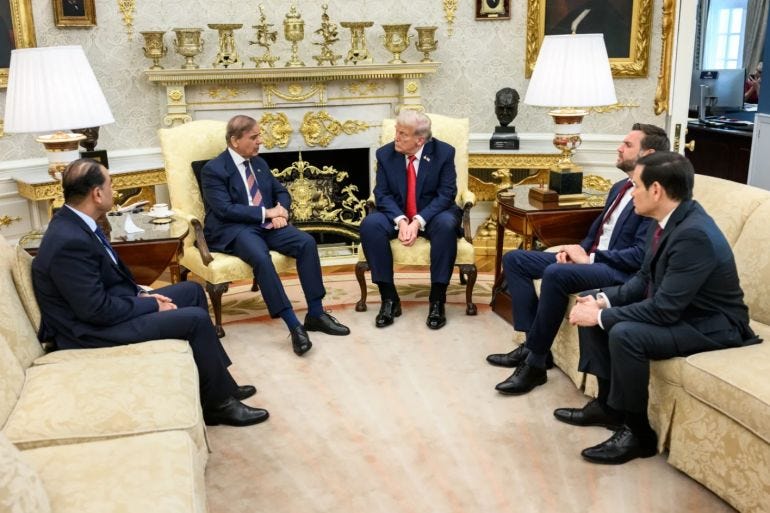
Pakistan’s recent attempt to broker talks with Iran, reportedly involving senior US officials meeting Iranian counterparts in Islamabad this week, is not an act of diplomatic generosity. It is an act of economic survival. The same is true of Sudan’s accelerating entanglement with Islamist networks that Washington has now designated as terrorist. Both countries are being compressed by forces they did not create and cannot control. The Iran war is the catalyst, but the underlying vulnerabilities are structural, and in both cases, the longer the war continues, the more trapped each regime becomes.
Pakistan and the economics of neutrality
Pakistan imports more than 80% of its oil. Between July 2025 and February 2026, its oil import bill reached $10.71 billion. The closure of the Strait of Hormuz, through which roughly 20% of global oil and a significant share of LNG transits, has cut Pakistan off from its primary energy supply chain. QatarEnergy has declared force majeure on its contracts. Pakistan relies heavily on Qatari LNG. Fuel prices have jumped 20% in a single week, with petrol at $1.15 per litre and diesel at $1.20, the largest increase in the country’s history.
The government responded with emergency austerity measures on 9 March. A 4-day working week for federal and provincial employees. 50% of government staff working from home on rotation. A 2-week closure of educational institutions. Restrictions on non-essential energy use. The Pakistan Navy launched Operation Muhafiz-ul-Bahr to escort merchant vessels through contested shipping lanes. These are not precautionary measures. They are crisis management for a state with approximately 20 days of oil reserves and foreign exchange reserves of roughly $16 billion only.
The energy shock is only one strain. Gulf economies, which account for more than half of Pakistan’s remittance inflows, are themselves under strain. Saudi has intercepted hundreds of Iranian ballistic missiles and drones since 28 February. The UAE has intercepted over 350 ballistic missiles, 15 cruise missiles, and nearly 1,800 drones. Economic activity across the Gulf is contracting. Remittances to Pakistan, a structural lifeline worth tens of billions annually, are at risk of decline precisely when the country needs them most. Exports, already down nearly 8% during the July-February period, face further deterioration as global demand weakens and freight rates spike. The current account deficit is widening. The trajectory bears an uncomfortable resemblance to the 2022 crisis that forced Pakistan into its 24th IMF programme, worth $7 billion.