

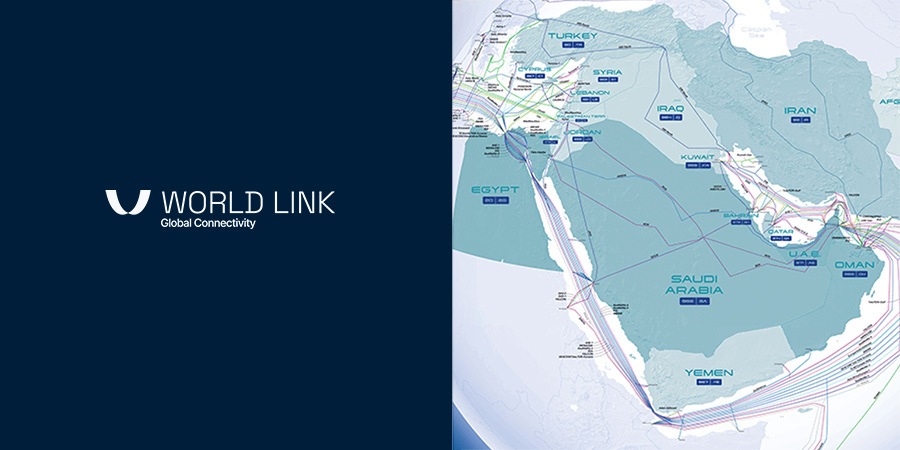
An Iraqi-Emirati consortium announced a $700 million data cable project linking the UAE to Turkey via Iraq on 16 February, barely a week after Saudi’s stc Group won an $800 million contract for Syria’s SilkLink network. The timing is no accident. This is UAE-Saudi competition playing out through duelling infrastructure bets of nearly identical scale, with each power racing to lock in alternative transit routes and position itself as the region’s indispensable digital hub for grand projects like the IMEC. But what elevates this beyond typical Gulf rivalry is what the UAE is actually building the infrastructure to support, namely a $20 billion AI compute cluster that OpenAI claims will serve half the world’s population.
The competition is real and the cable investments reveal how seriously each side is taking it. Saudi moved first with Syria, leveraging Trump’s May 2025 sanctions lift to secure an 800-kilometre fibre-optic network with Mediterranean access. The UAE’s response through Iraq came within days, committing $700 million to match Saudi’s $800 million bet. That’s Abu Dhabi ensuring it doesn’t cede regional connectivity dominance to Riyadh whilst simultaneously building redundancy for the most ambitious AI infrastructure project outside the US.
In May 2025, OpenAI announced Stargate UAE, the first international deployment of its platform jointly developed with SoftBank, Oracle, and Abu Dhabi’s MGX fund. The facility will span 10 square miles, consume 5 gigawatts of power, and will be physically larger than Monaco. The initial 1-gigawatt AI cluster is set to begin operations in 2026, with construction photographs from October 2025 showing work well advanced. The UAE committed between $16 billion to $20 billion total, with $8 billion to $10 billion matched between UAE and US deployments.
This transforms the UAE-Saudi digital rivalry from regional posturing into genuine competition over who becomes the Middle East’s AI gateway with global implications. The UAE has locked in strategic partnerships with the dominant players through Microsoft’s $1.5 billion investment in G42 announced in April 2024, OpenAI’s selection of Abu Dhabi as its first international Stargate location, and MGX’s $100 billion target for AI infrastructure investments launched in March 2024. Riyadh is deploying capital at impressive scale through separate initiatives, but Abu Dhabi has secured the ecosystem that positions it to host compute infrastructure at a scale that could exceed Saudi’s entire national data centre capacity.

Red Sea Disruption Forces Alternative Routes
The Red Sea factor makes the competition urgent rather than merely strategic. Multiple submarine cables were severed in the Red Sea near Jeddah on 6 September 2025, causing widespread internet disruptions across Asia and the Middle East. The SMW4, IMEWE, FALCON GCX, and Europe India Gateway cables were all affected. This followed earlier February 2024 damage when a Houthi-struck vessel’s anchor destroyed three major cables. Microsoft Azure users faced significant latency spikes, and repairs take months because cable ships cannot safely operate in Houthi-controlled waters.