

Dear readers. MENA Unleashed is a reader-only platform with no sponsors or ads, so if you value our work please consider becoming a paid subscriber and sharing it with others, as your support keeps us independent.
Israel’s formal recognition of Somaliland on 26 December 2025 did not simply elevate Hargeisa, it also dragged Mogadishu back into the centre of Red Sea and Horn of Africa geopolitics, as the move turned Somalia’s territorial integrity from a slow-moving African diplomacy issue into a live regional re-alignment test. Somalia condemned the recognition and framed it as a direct violation of sovereignty and territorial integrity, while a UN Security Council session exposed sharp international divisions.
This shift lands on top of an older fault line that never fully closed, namely Ethiopia’s push for sea access through Somaliland, which triggered a prolonged dispute and forced Turkey to broker the Ankara Declaration process between Addis Ababa and Mogadishu. The Somaliland crisis converts Somalia’s coastline from a domestic problem into an international bargaining chip, forcing regional capitals to take positions they previously avoided when Somalia was treated mainly as a counterterrorism and humanitarian issue.
Regional Re-alignment
Turkey has firmly entrenched itself as the primary guarantor of Somalia’s sovereignty, leveraging its 2024 Defense and Economic Cooperation Framework Agreement to act as a security shield against external threats. Following Israel’s controversial recognition of Somaliland, Ankara escalated its involvement, viewing the move as a direct threat to its “Blue Homeland” strategy in the Horn of Africa. Turkey has deployed naval assets to secure Somali territorial waters and accelerated the training of elite Somali commando units, effectively signalling that any implementation of the Somaliland-Ethiopia port deal or further separatist recognition would face a military deterrent on the ground.
Beyond hard power, Turkey has cemented its role through deep strategic and economic integration, making itself indispensable to Mogadishu’s survival. In December 2025, Turkey commenced construction on a space launch facility in Somalia and activated its exclusive rights to explore for offshore oil and gas, creating long-term economic ties. This infrastructure development runs parallel to the “Ankara Process,” a diplomatic track where Turkey remains the only mediator capable of facilitating dialogue between Somalia and Ethiopia, thereby positioning itself as the critical balancer preventing a full-scale regional conflict.

Riyadh’s posture has become more explicit after Somaliland declared independence and sharpened, with Saudi rejecting recognition or engagement with separatist entities in Somalia, framing the issue in terms of unity and territorial integrity. This sits alongside a broader Saudi recalibration across the Red Sea, where rivalry with the UAE is increasing, including deeper coordination with Egypt and Somalia in response to Emirati influence through ports, bases, and local partnerships. This deepening comes immediately after Somalia cancelled all of its agreements with the UAE and in light of growing rifts between Saudi and the UAE on other regional conflicts.
Qatar’s approach has been more operational than rhetorical. Somali and Qatar signed a defence cooperation agreement at DIMDEX 2026 in Doha related to training, capability development, and broader security coordination, which positions Qatar as a privileged partner during a period of volatility around sovereignty disputes. Qatat’s strong ties with Turkey also position it to play a greater role in Somalia that is similar to that it plays in the new Syria.

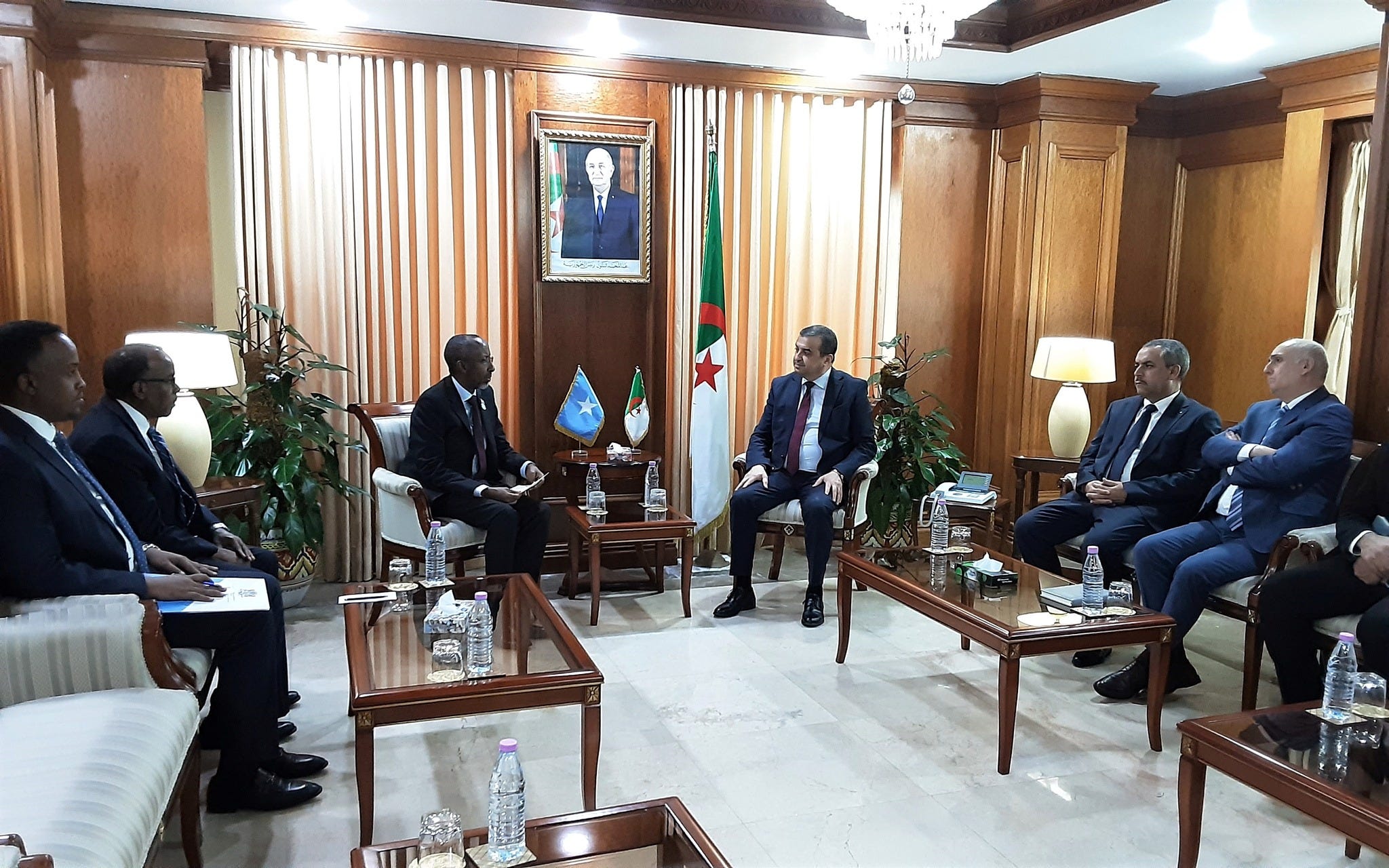
Algeria’s engagement is different in style and is being built through cooperation frameworks, education, and diplomatic signalling, rather than through direct military posture. For example, on January 15, 2026, Algeria’s Minister of Hydrocarbons and Mines, received a high-level delegation from Somalia. The meeting focused on strengthening bilateral relations and exploring cooperation across the entire hydrocarbon value chain, including exploration, production, and refining. Both parties emphasised the importance of training and capacity building, with Algeria expressing readiness to support the development of Somalia’s nascent hydrocarbon sector through the expertise of the Sonatrach Group and the Algerian Petroleum Institute, particularly in technical training and the establishment of legal and regulatory frameworks.
What comes next for Somalia
If the US and Israel treat Somaliland as a strategic node linked to Red Sea security and Yemen proximity, then Somalia will be pressured to respond by locking in Arab and Muslim support around territorial integrity, and supporting states will be pressured to decide whether they prioritise short-run tactical gains in ports and bases or long-run regional stability.
Somalia now offers leverage across Red Sea maritime security, Horn of Africa re-alignment, and the politics of precedent around separatism and recognition. The risk is that Somalia becomes a crowded arena where external competition complicates internal fragmentation rather than stabilising it, especially if security assistance becomes politicised and if port economics become a proxy war. The opportunity is that Somalia’s state institutions gain bargaining power and resources as the region can no longer treat Somalia as a peripheral crisis state, and that change can translate into greater sovereignty rather than permanent dependency.
📱 Twitter (X): @MENAUnleashed
🎥 YouTube: MENA Unleashed
📸 Instagram: @MENAUnleashed
💼 LinkedIn: MENA Unleashed
🎵 TikTok: @MENAUnleashed