

Dear readers. MENA Unleashed is a reader-only platform with no sponsors or ads, so if you value our work please consider becoming a paid subscriber and sharing it with others, as your support keeps us independent.
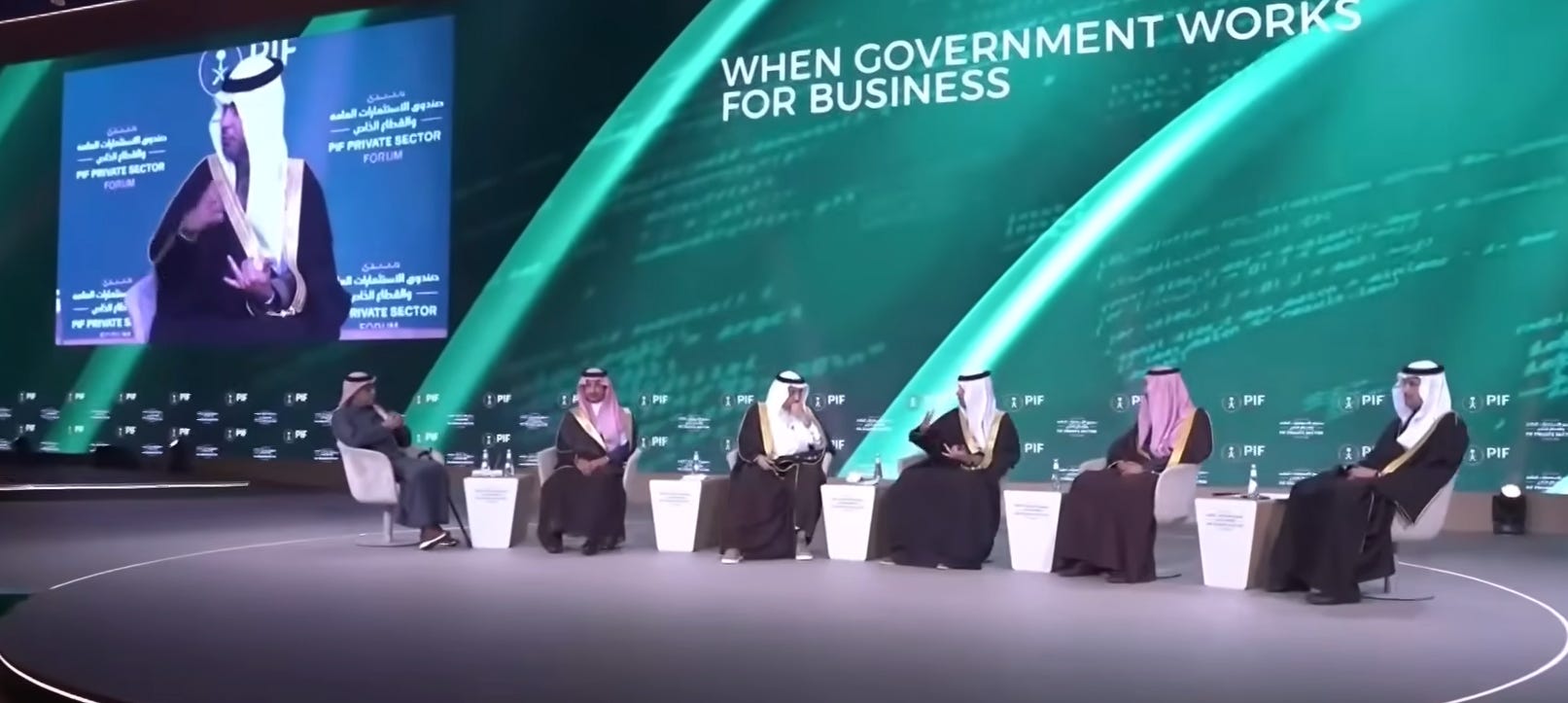
Saudi Arabia’s Public Investment Fund (PIF) is preparing to unveil a revised 2026-2030 strategy this week that represents far more than technocratic adjustment. The expected pivot signals a fundamental recalibration of the Kingdom’s position within global capital flows and regional trade architectures at a moment when its geopolitical leverage is declining and competition is consolidating around it. More fundamentally, it marks the Kingdom’s shift from expensive military regionalism towards a transactional approach where reconstruction profits and economic survival displace the ideological contests and proxy wars that consumed resources in the past, whilst generating no returns.
The strategy reset arrives as Vision 2030 confronts the structural limits of transformation financed through sovereign spending in a subdued oil price environment. Yet it also reflects something more immediate. Both Mohammed bin Salman and Donald Trump are pivoting towards profit extraction from the wreckage of failed interventions. The $1 trillion Saudi investment commitment to Washington announced in November 2025 binds these imperatives together. Saudi capital flows into American AI, critical minerals, nuclear cooperation and defence industries whilst joint ventures target reconstruction opportunities in Syria and Libya where previous regime change fantasies collapsed into expensive stalemates. This transactional turn explains why Riyadh is simultaneously withdrawing from conflicts it cannot win whilst positioning itself to monetise the stabilisation that follows.
From Ideology to Accumulation
The anticipated scaling back of mega-projects like The Line exposes the fiscal calculations that always underpinned Vision 2030’s vulnerabilities. Hydrocarbon revenues cannot simultaneously finance prestige urbanism, industrial capacity development, regional military interventions, and the massive infrastructure investments required to position Saudi Arabia as a node in competing trade corridors. The original Vision 2030 model presumed oil prices and global capital flows that have not materialised. More critically, it presumed regional dominance that the Kingdom could not achieve through military means and can no longer afford to pursue.