

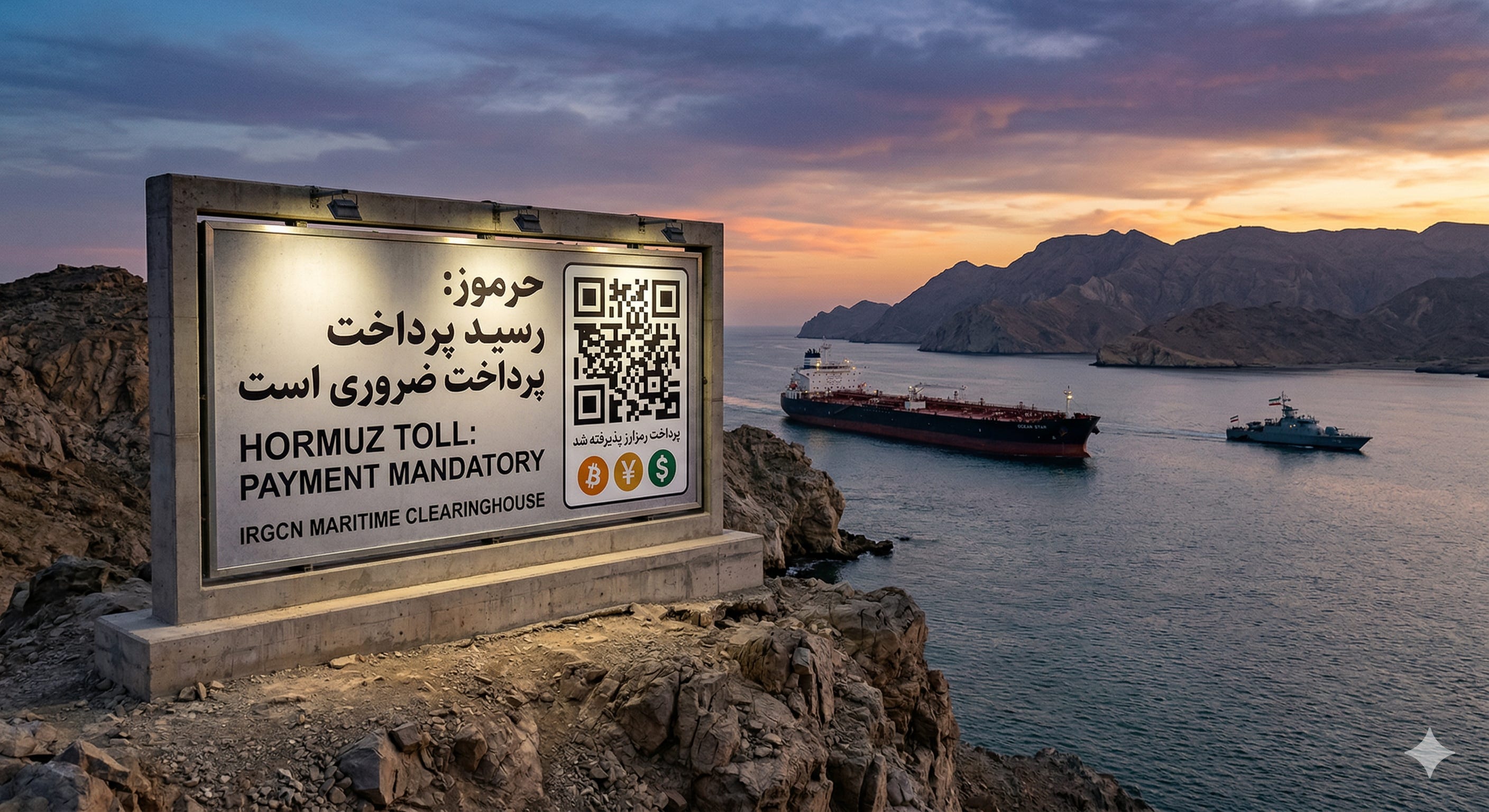
The Islamabad ceasefire announced this week is not a return to the status quo but the inaugural act of a new regional order defined by ledger dominance. While global attention remains fixed on the temporary suspension of kinetic strikes, the real revolution is occurring in the maritime law of the Gulf. The proposal to institutionalise transit fees for the Strait of Hormuz represents the final collapse of the post-1945 security architecture, where the US Navy underwrote the free flow of energy as a global commons. By converting a natural waterway into a sovereign toll booth, Tehran is effectively nationalising the primary artery of global industrial life. This is not a desperate grab for liquidity by a sanctioned state; it is a fundamental restructuring of the political economy of the Middle East, where the ability to disrupt is being formalised into a permanent right to invoice. This is important because it may also incentivise Houthis to try to financialise their geopolitical location to monetise Red Sea access, creating a global rippling effect.
Ledger dominance and the privatisation of the global commons
For 8 decades, the Strait of Hormuz operated under a security escrow. Capital markets assumed that the cost of passage was zero because the US taxpayer covered the bill for regional stability. The 2026 conflict has exposed the terminal fragility of this arrangement. The move to charge up to 2,000,000 USD per tanker is the logical conclusion of a decade of maritime grey-zone warfare. It transforms the Islamic Revolutionary Guard Corps from a paramilitary force into a maritime central bank. If this fee is successfully codified, it sets a precedent that will inevitably be mirrored in the Bab el-Mandeb and potentially the Strait of Malacca. The world is moving from a system of guaranteed access to a system of sovereign subscriptions, where the security of a vessel is no longer a public good but a private service provided by the local hegemon. This shift has already seen maritime war risk insurance premiums surge by as much as 1,000% in certain cases, forcing states like India to consider 1,500,000,000 USD sovereign guarantee funds just to keep their trade flows moving.