

Dear readers. MENA Unleashed is a reader-only platform with no sponsors or ads, so if you value our work please consider becoming a paid subscriber and sharing it with others, as your support keeps us independent.
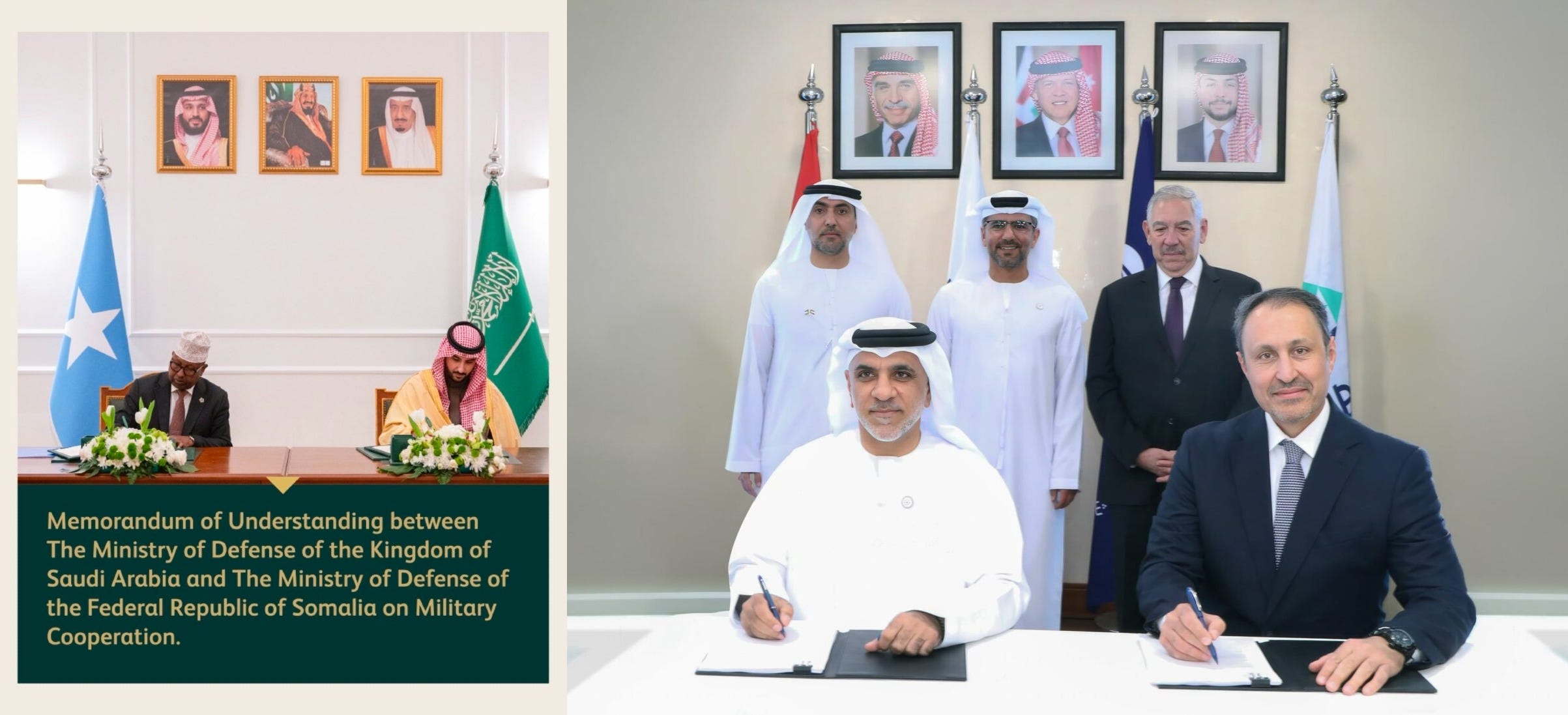
Saudi Arabia signed a military cooperation agreement with Somalia on 9th February whilst the UAE secured a 30-year concession to operate Jordan’s Aqaba port just days earlier. These developments, seemingly disconnected deals, actually represent the latest moves in an intensifying struggle for control over Red Sea maritime corridors, minerals, and port infrastructure. The competition involves Saudi Arabia, the UAE, Turkey, Israel and potentially Ethiopia, each seeking to secure strategic positions along one of the world’s most critical waterways. What makes this moment distinctive is that traditional Gulf allies Saudi Arabia and the UAE are now openly competing rather than coordinating, transforming the Red Sea from a zone of shared interest into contested terrain where regional powers are building rival networks of ports, bases and client relationships.
The Saudi move into Somalia through military cooperation seeks to systematically displace UAE influence across the Horn of Africa after successfully pushing Emirati forces out of Yemen through what has become an undeclared proxy war between former coalition partners. The defence agreement signed in Riyadh between Somali Defence Minister Ahmed Moallim Fiqi and Saudi counterpart Prince Khalid bin Salman covers military training, equipment provision and security technology transfers. More importantly, it positions Saudi Arabia as Somalia’s primary Gulf partner precisely as Mogadishu has terminated multiple defence and security agreements with the UAE amid disputes over regional interference.
The timing matters enormously. Somalia signed a similar defence pact with Qatar in January 2026, suggesting a deliberate strategy of diversifying Gulf partnerships away from the UAE towards states aligned with Saudi interests. Turkey maintains its largest overseas military training base in Mogadishu, where over 15,000 Somali soldiers have been trained, and recently extended its naval mission in the Gulf of Aden for another year with broad presidential authority over deployment scope. Turkey also holds extensive energy exploration rights in Somali waters and controls fishing licences through a joint company established with Somalia’s government. The emerging pattern is a Saudi-Turkish-Qatari alignment in Somalia directly opposing UAE influence, transforming the country into a theatre for Gulf competition rather than cooperation.
The UAE response has been to consolidate positions elsewhere whilst accusing Saudi Arabia of working with Houthis to undermine Emirati interests. Abu Dhabi’s securing of the Aqaba port concession represents a critical defensive move after suffering setbacks across Sudan, Somalia, Djibouti and Yemen. AD Ports Group signed a 30-year agreement to manage and operate Aqaba Multipurpose Port through a joint venture holding 70% ownership, with operations beginning in August 2026. Aqaba handles approximately 80% of Jordan’s exports and 65% of its imports whilst serving as a vital transit point for Saudi Arabia and Iraq. By controlling this facility, the UAE secures influence over a Red Sea port that Saudi Arabia itself relies upon for some commercial flows, creating leverage that Abu Dhabi has lost elsewhere.