

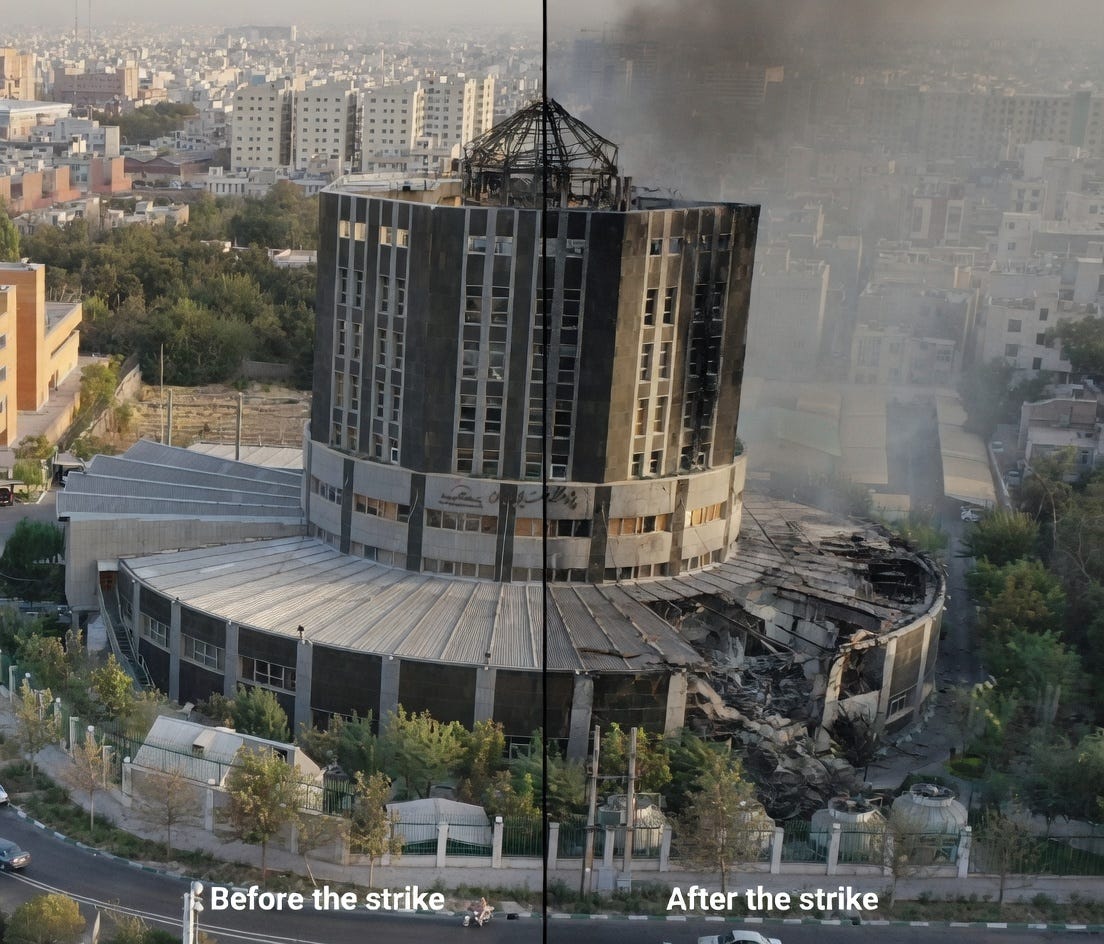
On 14 March 2026, the Israel Defence Forces confirmed it had destroyed the primary research centre of the Iranian Space Agency alongside an air defence production facility in Tehran. The strike was not peripheral. It was a direct hit on the infrastructure Iran has used to build, test and orbit reconnaissance satellites for over a decade. 48 hours earlier, US Central Command had already confirmed that space and cyber capabilities acted as first movers in Operation Epic Fury, layering non-kinetic effects to blind Iranian sensor and communication networks before a single bomb was dropped. This is not a war with a space dimension. This is a war in which space is the dimension that matters most.
The targeting of Iran’s space infrastructure is not incidental to the broader campaign. It is structurally central to what the US and Israel are trying to achieve. The logic is straightforward. Whoever controls orbital surveillance, satellite navigation and space-enabled communications in the Middle East controls the tempo and precision of modern warfare. Israel proved this during the 12-day War of June 2025, when its constellation of Ofek and Dror satellites collected tens of millions of square kilometres of imagery across Iranian territory, generating targets in real time and enabling strike operations from orbit to cockpit without risking a single operative on the ground. Over 12,000 satellite images of Iran were captured during Operation Rising Lion alone. That asymmetry of vision is what Israel is now fighting to preserve and what the US is fighting to entrench.
Orbital Arms Race
The Middle East’s space race did not begin with this war but the war has accelerated it beyond recognition. Israel’s Ofek programme dates to 1988, making it one of only 13 countries with indigenous launch capability. In September 2025, Israel launched Ofek 19, an advanced synthetic aperture radar satellite capable of imaging objects smaller than 50 centimetres in any weather condition, day or night. The Israeli defence establishment has committed to investing billions of shekels over the coming decade to deploy a full satellite constellation offering persistent surveillance of any point in the Middle East. The stated ambition is coverage every 15 minutes, combining large high-resolution platforms with swarms of smaller, cheaper satellites developed by Elbit and Rafael. Israel’s space sector now comprises roughly 90 companies and grew 66% between 2020 and 2023, outpacing its broader tech ecosystem by a factor of three. In July 2025, Israel Aerospace Industries launched the Dror 1 communications satellite. The Israeli space economy is no longer a niche defence project. It is a pillar of national power.