

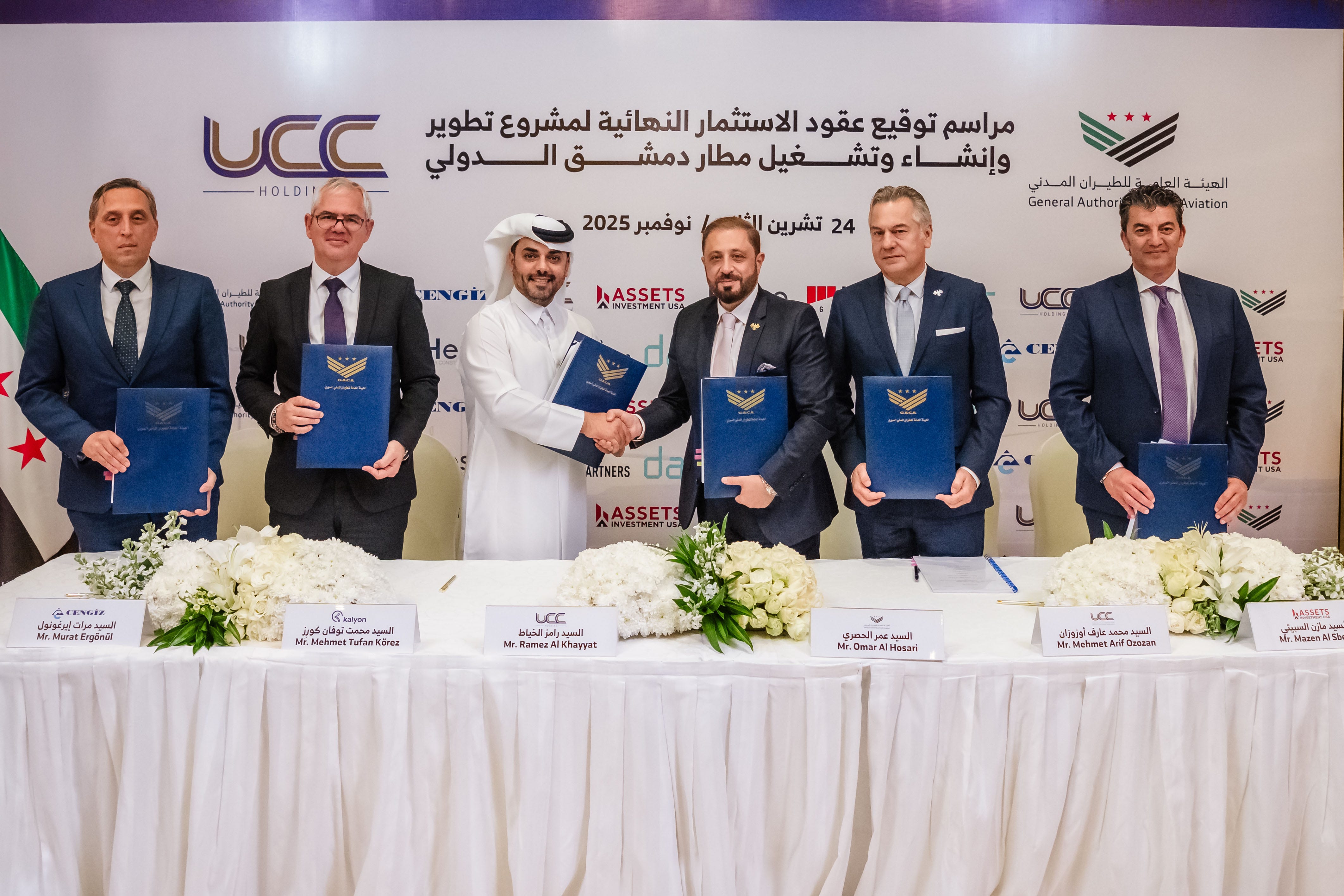
Damascus has just signed the biggest investment contract in its history for an airport. Syria’s General Authority of Civil Aviation has closed a 4 billion dollar concession with an international consortium led by Qatar’s UCC Holding to develop, expand and operate Damascus International Airport, with a planned capacity of 31 million passengers a year. For a country that has lived under siege and bombing for over a decade, this is more than a construction story. It is a sign that post-sanctions Syria is open for business, albeit within limits, and that Gulf and Western capital are willing to test the political ceiling.
The deal is not theoretical. The consortium has already started work on Terminal 2 and on rehabilitating the airport hotel and access road. The first step is to get a revamped terminal running before the next Hajj season, with Terminal 1 to be redesigned and completed by the end of 2026, lifting capacity to around 6 million passengers. Later phases bring a new Terminal 3, expanded airside infrastructure, cargo centres, a free zone and a five-star hotel, with jobs promised for more than ninety thousand people across construction, aviation services and hospitality. This is a long-term, revenue-backed concession anchored in a hard asset that once sat at the heart of Israel’s air war on Syria. The question is not whether it is technically viable. It is whether the strategic environment will let it breathe.
