

Dear readers. MENA Unleashed is a reader-only platform with no sponsors or ads, so if you value our work please consider becoming a paid subscriber and sharing it with others, as your support keeps us independent.
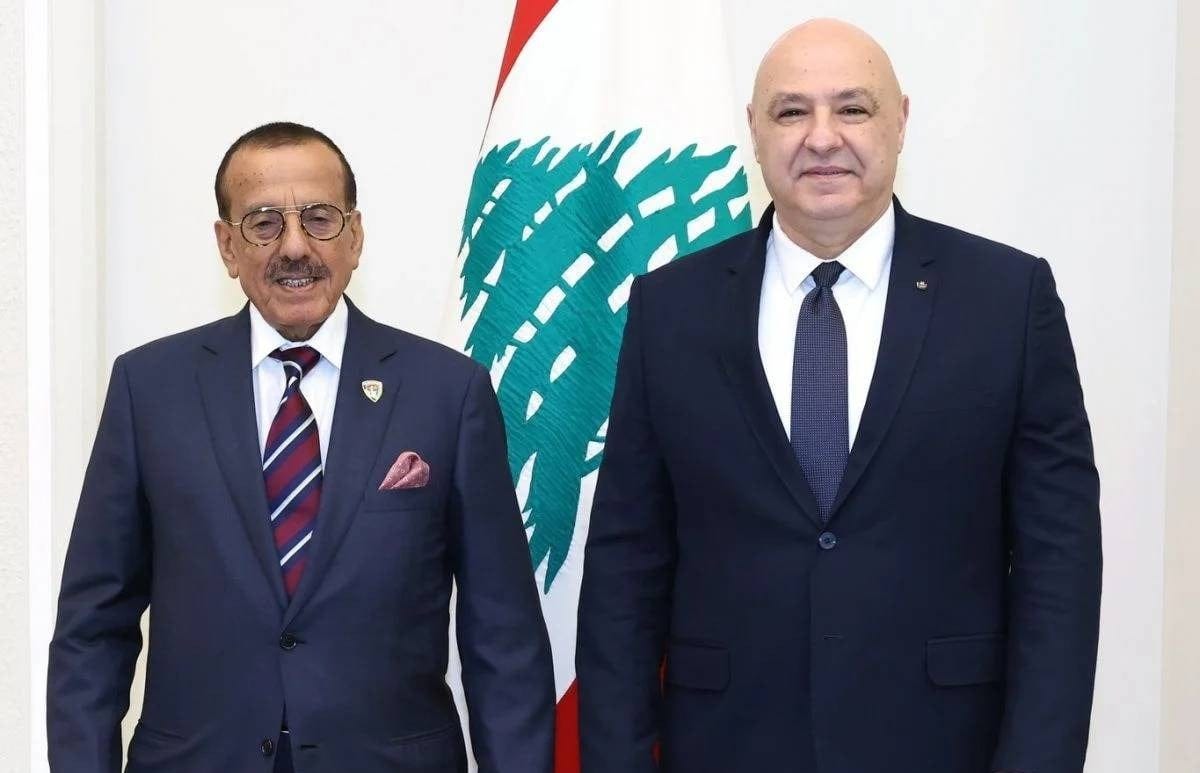
UAE billionaire Khalaf Al Habtoor announced on 26 January 2026 that his conglomerate will pursue legal action against Lebanese authorities over $1.7 billion in investment losses. The Al Habtoor Group, which operates the Metropolitan Palace Hotel and Habtoor Land theme park in Lebanon, is seeking redress for funds blocked since Lebanon’s 2019 banking crisis. The lawsuit is not a sudden outburst, but the culmination of years of procedural engagement and the opening of a different kind of pressure campaign. After capital controls trapped foreign depositors, accounts were frozen without legal framework, and withdrawals were blocked or subjected to punitive haircuts whilst the Lebanese state failed to establish transparent rules or protect property rights.
The lawsuit arrives precisely at the same time Lebanon attempts to attract Gulf capital for reconstruction. Following 14 months of conflict with Israel, Lebanon requires between $11 billion and $14 billion to rebuild destroyed housing stock and infrastructure. The government is courting donors, launching investor conferences, and positioning itself as reform-minded. The Habtoor lawsuit transforms Lebanon’s dysfunction into a legal claim with international standing. It frames investor losses not as unfortunate collateral damage but as sovereign failure to uphold contractual obligations. It raises the reputational cost of inaction at the moment Beirut can least afford it.

From Rupture to Calculated Re-engagement
The lawsuit lands within a broader UAE strategy towards Lebanon that has shifted from rupture to cautious re-engagement, but on different terms. In October 2021, Abu Dhabi recalled its diplomats and banned Emirati citizens from travelling to Lebanon after Information Minister George Kordahi defended Houthi rebels in Yemen, calling their actions “self-defence” against the Saudi-led coalition. The rupture followed months of tension, including comments by Lebanon’s foreign minister insulting Gulf states as “Bedouins” and accusing them of creating ISIS.
For nearly four years, the UAE maintained diplomatic distance whilst Lebanon spiralled deeper into economic collapse. The thaw began in October 2023, when the UAE announced it would reopen its embassy following a meeting between President Mohamed bin Zayed and Prime Minister Najib Mikati. But the embassy did not actually reopen until January 2025. Travel restrictions on Emirati citizens visiting Lebanon were only lifted in May 2025, following President Joseph Aoun’s first official visit to Abu Dhabi.

Diplomatic language now speaks of re-engagement, yet capital remains deliberately withheld. Despite having held $7.1 billion in direct investments in Lebanon as of 2016 across seaports, pharmaceuticals, banking, energy, and real estate, the UAE provided only $100 million in support during 2024. Abu Dhabi is making clear that Lebanon will not see serious Gulf investment unless it undertakes structural change in banking, governance, and security architecture.
Law as Discipline
What distinguishes this moment from previous reform pressures is the method. Demands are no longer delivered primarily through donor conferences or diplomatic statements. They are being enforced through law. The Habtoor case represents legal warfare, which is the use of international legal mechanisms to discipline states that cannot or will not discipline themselves. Investment treaties, bilateral agreements, and arbitration frameworks are being mobilised as instruments of pressure where traditional diplomacy has failed. This approach solves a structural problem that has plagued Gulf engagement with Lebanon. Political promises in Beirut are cheap. Reforms are announced repeatedly and never implemented. The political elite survives by performing change whilst protecting entrenched interests.
This aligns with Abu Dhabi’s broader Lebanon strategy since the 2024 ceasefire. The UAE has conspicuously avoided grand reconstruction pledges. It has positioned itself firmly within a reform-first framework and linked it to the broader Abraham Accords. Security consolidation, banking resolution, judicial independence, and investor protection are treated as prerequisites, not concurrent objectives.
For the UAE, this represents a maturation of its regional economic statecraft. Abu Dhabi is building a toolkit for managing broken markets without direct entanglement. This allows the UAE to maintain pressure without visible confrontation, to demand change without appearing interventionist, and to protect its investors without deploying political capital.
The Terms Have Changed
Lebanon can continue the performance of reform whilst shielding the banking elite and political class from accountability, or it can accept that the rules have changed. The Lebanese government has made gestures. It appointed new members to the Council for Development and Reconstruction board and began recruitment for an electricity regulatory body. It has launched discussions with the World Bank on a $980 million LEAP programme and endorsed a reconstruction trust fund promising transparency. But these remain procedural moves without substantive change to the banking system or accountability for those who engineered the collapse.
Transparent capital controls with legal basis, credible bank resolution that imposes losses on shareholders and insiders, judicial independence in financial disputes, and a reconstruction framework that breaks with clientelist distribution are no longer aspirational, but entry requirements.
📱 Twitter (X): @MENAUnleashed
🎥 YouTube: MENA Unleashed
📸 Instagram: @MENAUnleashed
💼 LinkedIn: MENA Unleashed
🎵 TikTok: @MENAUnleashed