

Dear readers. MENA Unleashed is a reader-only platform with no sponsors or ads, so if you value our work please consider becoming a paid subscriber and sharing it with others, as your support keeps us independent.
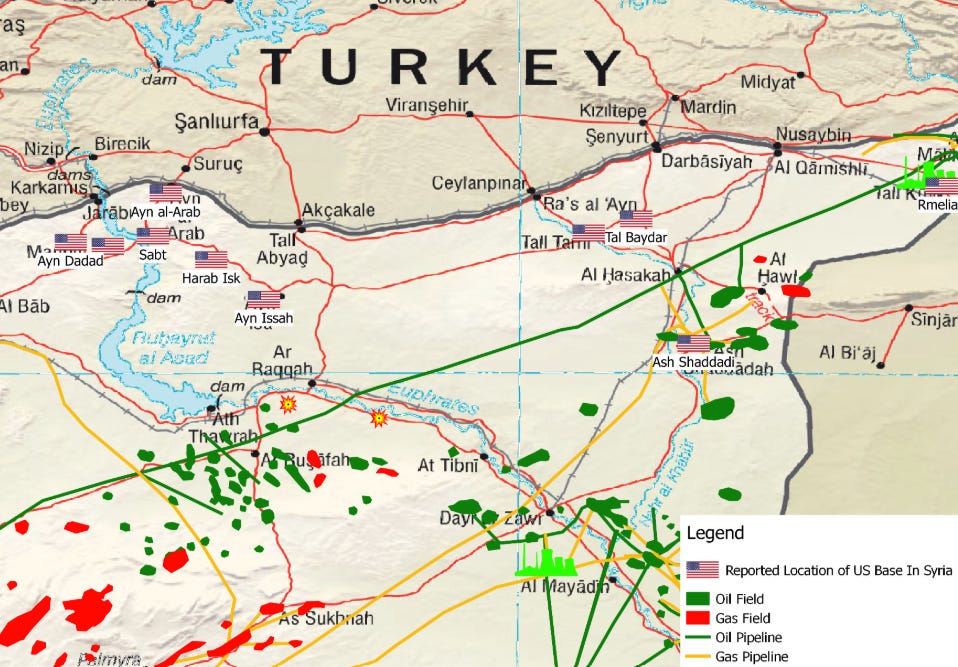
Following SDF troops withdrawal, the Syrian state has retaken control over the oil and gas fields previously out of its control. The retaking of eastern oil and gas assets opens the gate for increasing production, yet the fields are currently operating at low levels, and the upside is not guaranteed. Al Omar, Syria’s largest oilfield, previously produced around 50,000 barrels per day but is now producing roughly 5,000 barrels per day. Despite the limited economic benefit, the retaking of the fields contributes to the centralisation of the energy sector into the hand of the new Sharaa government under entities like the Syrian Petroleum Company as it seeks to transform the energy system and use it to buy popular support and legitimacy after the take over in 2024.

The production reality
Syria’s oil and gas sector is modest in global terms but strategically important domestically, structured around a limited number of core fields concentrated in the east and centre of the country rather than a large, diversified base. Before the war, Syria operated roughly two dozen producing oil fields and a smaller number of gas fields, with oil production heavily concentrated in Deir ez Zor and Hasakah provinces and gas production clustered around Palmyra and central Syria. The most important oil fields are al Omar, al Tanak, al Ward, al Jafra, and the Rumailan complex in Hasakah, while the key gas assets include the Conoco gas plant, al Shaer, Hayan, Jazal, and Arak.
