

Dear readers. MENA Unleashed is a reader-only platform with no sponsors or ads, so if you value our work please consider becoming a paid subscriber and sharing it with others, as your support keeps us independent.
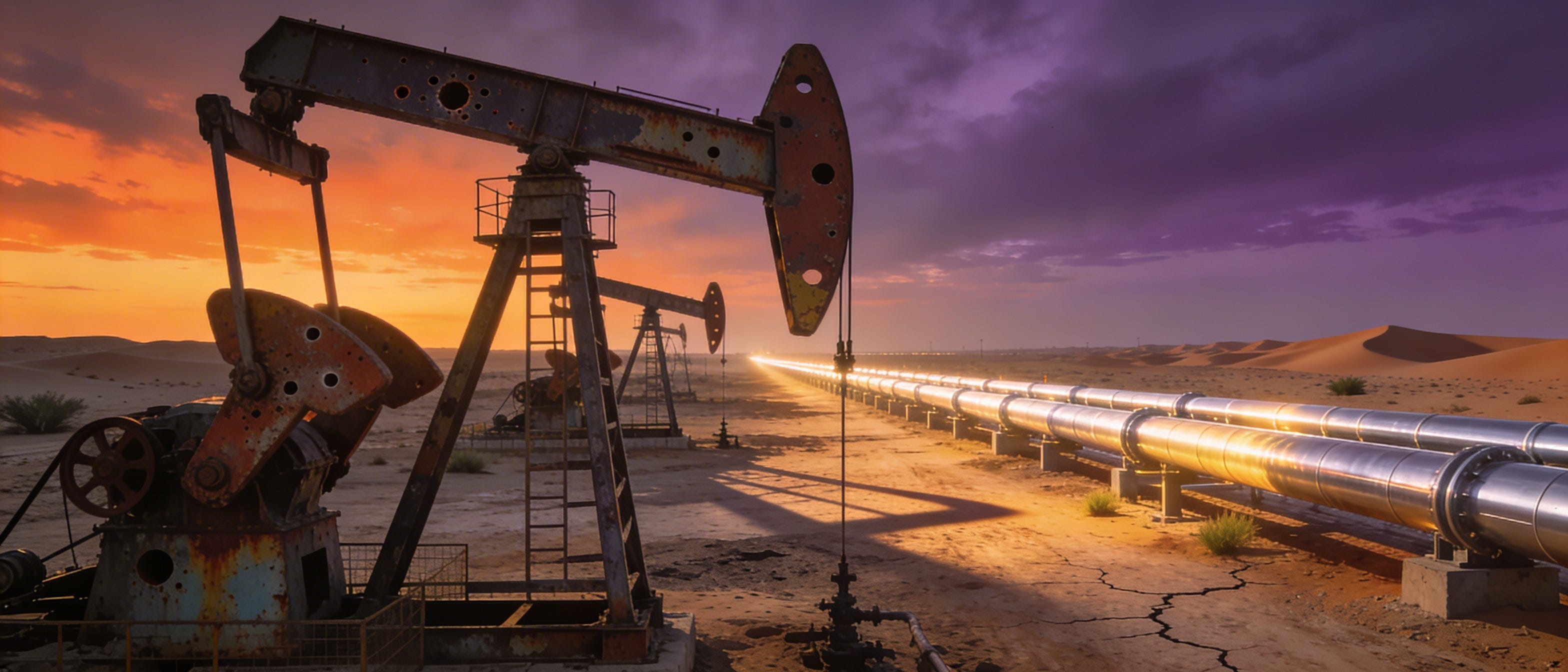
Syria has emerged as the unlikely centrepiece of a sweeping recalibration in MENA geopolitics, driven not by military conquest or diplomatic breakthrough but by the mechanics of oil and gas exploration. A consortium of Saudi and American firms is moving into northeastern Syria’s energy sector whilst Chevron, ConocoPhillips, TotalEnergies and Eni are negotiating access to what Syria’s petroleum chief claims are trillions of cubic metres of unexplored gas reserves. This is not simply opportunistic investment in a post-conflict economy. It represents the material expression of fundamental strategic shifts by both Washington and Riyadh, each responding to the failure of previous regional approaches and seeking new frameworks for projecting power and securing resources.

The Saudi Pivot to Syria
US Baker Hughes, Hunt Energy and Argent LNG are partnering with Saudi TAQA and ACWA Power to develop four to five exploration blocks in northeastern Syria. This follows Saudi Arabia’s capture of dominant positions in Syrian telecommunications and multibillion-pound commitments across transport, real estate and infrastructure announced just days earlier. The kingdom is not dabbling in Syrian reconstruction but establishing comprehensive economic control across multiple strategic sectors simultaneously. This surge of Saudi capital into Syria comes precisely as Riyadh acknowledges the spectacular failure of Vision 2030’s original ambitions and pivots towards resource extraction and regional economic integration as its core strategic model.

Saudi Arabia’s finance minister confirmed in February 2026 that Vision 2030 would be substantially revised, with grandiose megaprojects cancelled or indefinitely postponed in favour of traditional industries where the kingdom possesses genuine comparative advantage. The Public Investment Fund is being restructured away from speculative ventures towards domestic companies and sectors with clear paths to profitability. Neom has been quietly scaled back. The Line has effectively been shelved. What remains is a Saudi state apparatus desperately seeking revenues to fund growing deficits whilst debt drives whatever economic growth the kingdom still manages. Syria’s energy resources offer exactly what Saudi Arabia requires at this juncture, tangible assets that can generate profitable returns rather than consume capital only.